How Does Paint Correction Work?
- Posted February 15th, 2026
- •
- Category: Paint Correction
Most automotive enthusiasts are familiar with paint correction as a solution to scratched, dull, and uneven paint. What they may not know is how this process works to bring their car’s finish back to life.
Paint correction doesn’t just buff out or cover up damage. It’s a controlled, highly technical method of refining automotive paint to remove surface defects and restore clarity, depth, and gloss.
Here’s what you need to know about how this meticulous process turns back the clock on weathered paint.
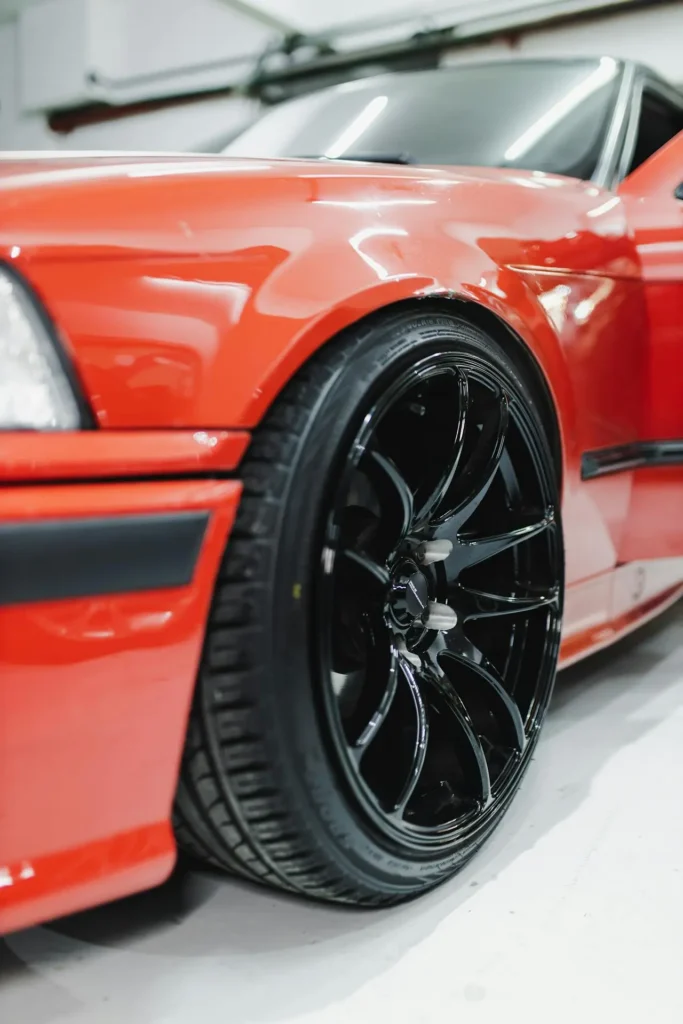 The Anatomy of Automotive Paint
From eye-popping reds to rich blacks, automotive paint is much more than pigment. Excluding pre-treatments, most finishes are made up of three layers:
- Primer: An initial layer that fills in minor surface imperfections to help the other layers adhere.
- Base coat: The pigmented layer, which may contain metallic flakes, mica, or pearl to achieve particular colors and effects.
- Clear coat: A transparent protective layer that adds gloss and protects the base coat from UV rays, contaminants, and minor abrasions.
Most of the time, minor paint defects like swirl marks, light scratches, oxidation, and etching only impact the clear coat.
Paint correction works by leveling this outermost layer to carefully remove imperfections so light reflects evenly. In order to do this, a small amount of the clear coat is permanently polished away.
Given that most clear coats are thinner than a sheet of printer paper, precision, experience, and attention to detail are essential for paint correction. Any clear coat that is removed during polishing can’t be replaced without repainting.
What Types of Damage Can Paint Correction Fix?
Though it can’t correct deep gashes and body damage, paint correction has a high success rate with many of the imperfections that come from daily driving.
Swirl Marks
These fine, circular scratches are often caused by improper washing and drying techniques or leftover grime in the automatic car wash. While shallow, they can scatter light and make paint look dull and hazy, especially on dark-colored vehicles.
Light Scratches
When low-hanging tree branches, runaway shopping carts, and loose keys mar your car’s clear coat, paint correction can permanently remove them.
Oxidation
Over time, UV exposure can cause paint to lose clarity and gloss. Paint correction removes the oxidized layer, restoring brightness and depth.
Water Spots and Etching
Acid rain, bird droppings, and contaminants in reclaimed water can cause a kind of chemical burn on your car’s clear coat known as “etching.” Affected areas show up as unsightly depressions that reflect light unevenly and reduce your paint’s gloss.
What Can’t Paint Correction Fix
In general, it helps to remember that paint correction works by removing, not replacing, material. It won’t repair:
- Deep scratches that reach the base coat
- Rock chips
- Clear coat failure or peeling
- Severely faded or damaged paint that requires repainting
That being said, paint correction is a great next step for vehicles that require body work or new paint, especially if you plan to install a ceramic coating. Perfecting the freshly painted surface will maximize the reflective quality of the ceramic and lock in a pristine look.
The Process
Paint correction is a delicate, detailed process. Here is an overview of how it works:
Step 1: Inspection and Measurement
Before anything can be done, a qualified detailing technician has to examine your paint to determine what’s possible.
Classic cars and restoration projects can present unique challenges, as it may be imperative to preserve rare or discontinued base coat colors. Your detailer will assess:
- The type and severity of defects
- Any previous polishing or correction work
- The thickness and condition of your paint
All of these factors work together to determine how aggressive the correction can be without compromising the clear coat.
Step 2: Decontamination
Polishing over embedded debris can create additional scratches, so surfaces must be fully decontaminated before they are corrected.
Any stuck-on metallic particles and tar are carefully removed using specially formulated chemicals.
Step 3: Machine Polishing
Heavier abrasive pads are used to remove deeper defects before lighter ones address surface imperfections. Detailers really rely on their training and experience to choose the right pads and tools to achieve a maximally reflective surface without removing more material than absolutely necessary.
Step 4: Refining and Finishing
Once defects are removed, the paint is refined to eliminate any unevenness that can cause it to look dull or hazy. This step brings out the depth and clarity of your base coat’s color.
Step 5: Protection
Paint correction removes existing defects, but it doesn’t protect against future damage. This is an ideal time to apply paint protection so you get the greatest possible return out of your investment.
Trust the Correction Experts
Flawless paint correction is a mix of science and craftsmanship. A technician must factor in the thickness, hardness, and history of the existing paint in order to cleanly erase damage without causing any.
If you’re considering paint correction, reach out to ATD to explore how our experts can achieve the best results for your vehicle. Let us help your paint live up to its potential.